Requirements Management vs Requirements Engineering: Ultimate Comparison
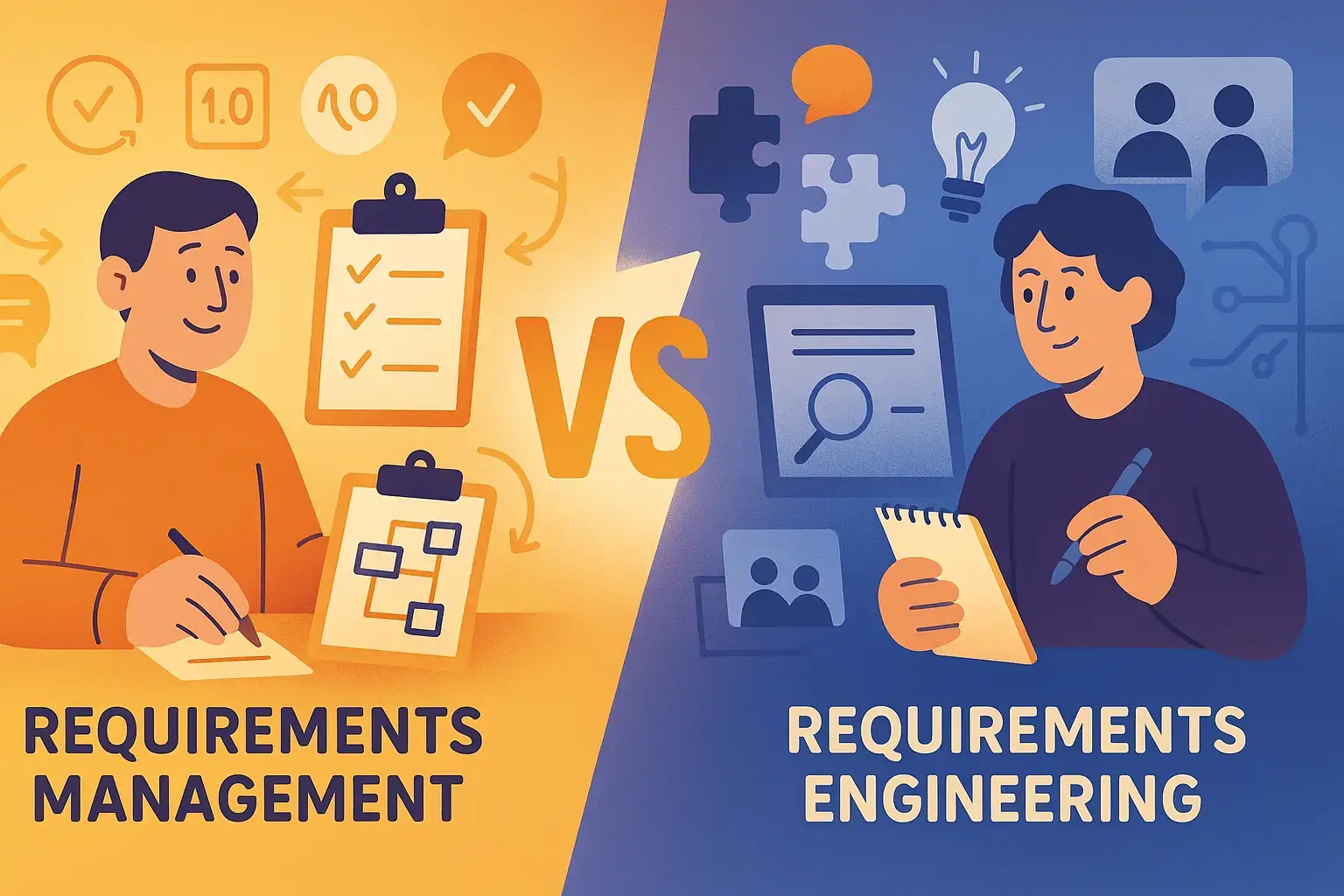
Requirements management and requirements engineering sound similar, but they're not. Teams often confuse them, causing problems. Requirements engineering figures out what needs to be built. It defines requirements, documents them, and validates that they're correct. Requirements management takes those requirements and tracks them throughout the project. It controls changes, maintains versions, and keeps everyone aligned. If you mix these up, you get scope creep, missed deadlines, and products that don't match what stakeholders asked for. This guide breaks down requirements management vs requirements engineering, shows how they work together, and helps you use both effectively.
Requirements Engineering focuses on discovering, analyzing, documenting, and validating what a system should do during the early phases of a project.
Requirements Management handles the ongoing tracking, controlling, and maintenance of requirements throughout the entire project lifecycle.
Requirements Engineers need strong analytical and communication skills to bridge business needs and technical constraints, while Requirements Managers require organizational skills and process orientation.
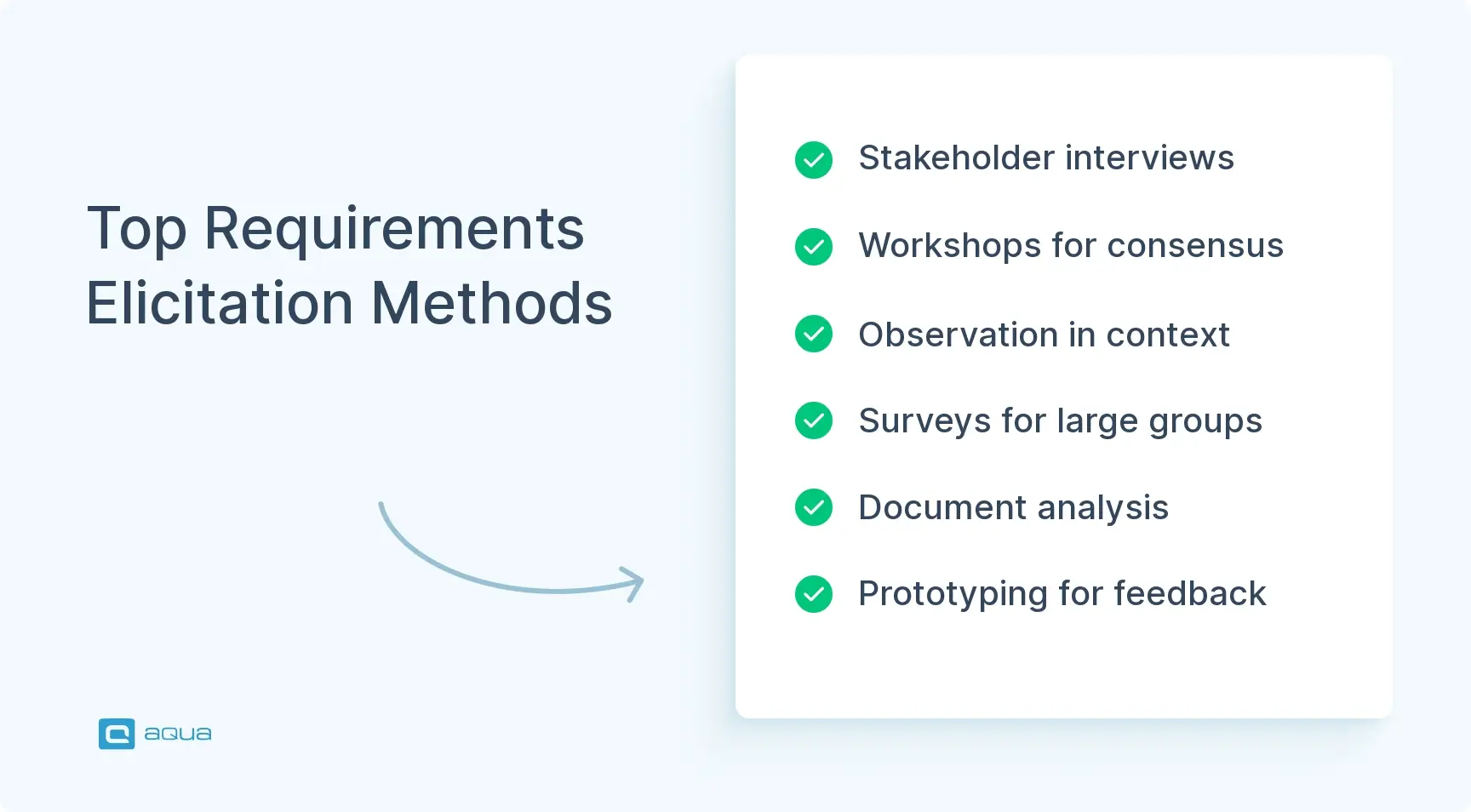
Effective requirements elicitation uses multiple methods including interviews, workshops, observation, and prototyping to uncover both explicit and implicit stakeholder needs.
Dedicated requirements tools provide crucial capabilities like traceability, version control, change management, and impact analysis that simple documents or spreadsheets cannot support.
Many teams confuse requirements engineering (creating requirements) with requirements management (controlling requirements over time), leading to scope creep and missed deadlines. Learn how these complementary disciplines work together to ensure you build the right product and keep it aligned with evolving needs 👇
Defining Requirements Management
Requirements management is how you plan, track, analyze, and control changes to requirements throughout your project lifecycle. It focuses on documenting, storing, communicating, tracing, and changing requirements after they’re established. Think of requirements management as the ongoing framework that keeps your requirements organized and accessible as your project progresses.
Why requirements management matters
Projects evolve constantly. Stakeholders change their minds. Business needs a change. Technical realities impose constraints. All of this affects your original requirements. Requirements management ensures these changes don’t harm your project by providing mechanisms to evaluate, approve, document, and communicate modifications systematically.
What requirements management handles
RM maintains the integrity of requirements from inception through delivery. It answers critical questions:
How will requirements be stored?
Who can change them?
What process must be followed for modifications?
How will changes be communicated to stakeholders?
How will requirements be traced to design, code, and tests?
Several tools and techniques make requirements management work:
Centralized repositories store requirements in structured databases where everyone can access them
Change control processes document who requested changes, why, and how they impact scope, schedule, and resources
Traceability matrices map relationships between requirements and other project artifacts
Version control systems maintain historical records of requirement changes
Impact analysis techniques assess how changes affect other requirements and project components
Common challenges in requirements management
The main challenges involve balancing flexibility with stability, maintaining comprehensive documentation without creating bureaucracy, and ensuring consistent communication across all stakeholders. When done well, requirements management provides the foundation for project success. How? By maintaining alignment between what stakeholders expect and what you’re actually building.
Defining Requirements Engineering
Requirements engineering is the process of developing complete, consistent, and relevant requirements. While requirements management tracks and controls requirements, requirements engineering focuses on discovering, analyzing, documenting, and validating what the system should do.
What requirements engineering actually does
Requirements engineering digs into the problem you’re trying to solve. It asks the right questions, understands stakeholder needs, and translates vague wishes into clear, implementable specifications. RE ensures you’re building the right product by correctly defining what needs to be built.
The RE process starts much earlier than requirements management activities. It begins with stakeholder identification and ends with a validated set of requirements that serve as the foundation for design and development. Throughout this journey, requirements engineers use specialized techniques to extract information, resolve conflicts, and create specifications that accurately represent user needs.
Key activities in requirements engineering
Requirements engineering encompasses four main activities:
Elicitation – Gathering requirements from stakeholders through interviews, workshops, observation, and other techniques
Analysis – Evaluating requirements for completeness, consistency, and feasibility while resolving conflicts
Specification – Documenting requirements in clear, precise language using models, diagrams, and structured text
Validation – Confirming that requirements reflect stakeholder intentions and can be implemented within project constraints
Requirement engineering takes many forms, and your requirements engineering tool should support this diversity. For example, in healthcare projects, it might involve shadowing nurses to understand their workflows, analyzing competing priorities between medical staff and administrators, creating detailed use cases for critical functions, and validating requirements through prototype demonstrations with end users.
The core challenge
Requirements engineering fills the knowledge gap between domain experts and technical teams. Stakeholders often struggle to articulate exactly what they need. Technical teams may not fully understand the business domain. Effective requirements engineering and management practices overcome this communication barrier through iterative refinement and collaborative techniques.
Key Differences Between Requirements Management and Requirements Engineering
Requirements management vs requirements engineering comes down to several fundamental differences in purpose, scope, timing, and focus. Understanding these distinctions helps you implement the right activities at the right time.
Purpose and focus
Requirements engineering defines what the system should do. It focuses on discovery, analysis, and specification of requirements. Requirements management handles how requirements are tracked, traced, and controlled throughout your project lifecycle.
Scope
Requirements engineering has a narrower focus on the technical process of developing good requirements. Requirements management has broader scope, encompassing the entire requirements lifecycle from initial documentation through maintenance and eventual retirement.
Timing
Requirements engineering is front loaded. The bulk of activities happen early in your project during discovery and definition phases. Requirements management spans the entire project, with consistent effort from requirements baseline through product delivery and beyond.
Side by side comparison
Aspect
Requirements Engineering
Requirements Management
Primary Focus
Developing the right requirements
Controlling requirements throughout the lifecycle
Key Activities
Elicitation, analysis, specification, validation
Tracking, tracing, change control, version management
These differences complement each other in practice. Requirements engineering produces the requirements that management processes then track and control. Without effective engineering, management processes have nothing worthwhile to manage. Without proper management, even well engineered requirements become outdated or disconnected from your evolving product.
Requirements engineering lays the foundation. Requirements management keeps that foundation relevant and reliable as your project progresses. Both are essential. Engineering gets requirements right initially. Management keeps them right over time. Requirements management vs engineering represents two sides of the same coin, each critical for project success but with distinct responsibilities.
When distinguishing between requirements management and requirements engineering, having the right tools to support both processes is critical. aqua cloud provides a comprehensive solution that bridges these disciplines with centralized requirements storage, flexible project structures, and seamless traceability. Unlike basic document repositories, aqua’s platform enables end-to-end visibility from initial requirements documentation through testing and delivery. With AI-powered requirement handling, you can transform notes, voice prompts, or visuals into structured requirements in seconds, then automatically generate test cases from those requirements for complete coverage. This integration is crucial when managing the distinct yet complementary processes of engineering requirements effectively and maintaining their integrity throughout the development lifecycle. aqua’s customizable workflows adapt to both Agile and Waterfall methodologies, supporting whatever approach works best for your organization.
Transform your requirements process with AI that cuts documentation time by up to 97%
We commonly see roles such as product manager, product owner, project manager, and business analyst working on requirements. However, if we view this activity from engineering and management perspectives, these activities can be separated into two key roles: requirements manager and requirements engineer. Let’s examine how they differ and what each role involves.
Requirements manager and requirements engineer represent different skill sets and responsibilities. Some overlap exists, but these positions have distinct focuses that align with their respective disciplines.
What a requirements engineer does
A requirements engineer develops and documents requirements that accurately reflect stakeholder needs. They bridge business stakeholders and technical teams, translating business problems into technical solutions.
Day-to-day activities include:
Conducting stakeholder interviews
Facilitating requirements workshops
Creating models and prototypes
Analyzing business processes
Documenting specifications
Requirements engineers need strong analytical skills combined with excellent communication abilities. They understand both the business domain and technical constraints to create requirements that are valuable, feasible, and testable. Good requirements engineers ask probing questions, listen carefully, and synthesize information from multiple sources. And they write everything with precision and clarity.
What a requirements manager does
A requirements manager focuses on processes and tools for handling requirements once they’re defined. Their responsibilities include establishing requirements baselines, implementing best practices for managing requirements changes, maintaining traceability, monitoring requirements status, and communicating changes to stakeholders. They ensure everyone works from the same version of requirements and that changes follow proper approval channels.
Requirements managers need strong organizational skills and process orientation. They must be detail oriented, comfortable with documentation, and adept at stakeholder management. Successful requirements managers maintain order amid changing priorities and keep all parties informed about the requirements status.
Different expertise, complementary roles
Requirements Engineer needs:
Domain knowledge in the project area
Facilitation and interviewing techniques
Requirements modeling methods like UML and process flows
Technical writing abilities
Critical thinking and problem analysis
Requirements Manager needs:
Process definition and improvement
Configuration management practices
Change control procedures
Communication and stakeholder management
Tool administration and customization
How they work together
In smaller organizations, one person might perform both roles and switch between engineering and management activities as needed. Larger organizations often separate these functions to allow specialization. Regardless of structure, both roles must work closely together. The engineer develops quality requirements. The manager shepherds them through the development process. Requirements engineering and management as complementary disciplines ensures comprehensive coverage of all requirements related activities.
Requirements Elicitation Methods in Engineering
Requirements elicitation gathers information from stakeholders about what they need, expect, and what constraints they face. This sets the foundation for everything that comes after. If you pick the wrong elicitation method, you’ll miss critical requirements.
Asking what people want isn’t enough
People can’t always articulate what they need. They don’t know what’s technically possible. They describe symptoms, not problems. Requirements engineers use different techniques to uncover what stakeholders actually need, not just what they say they want.
Interviews dig deep
Interviews and direct conversations let you have direct contact with stakeholders about their perspectives, priorities, and pain points. The key? Ask the right questions and actually listen. “What challenges do you face in your current process?” gets you better information than “Do you like the current system?”
Best way to gathers requirements is honestly just have conversations with people. They will tell you what they want/need and then it's up to you to use your critical skills thinking skills and technical assessment to find gaps and dig deeper.
Bring multiple stakeholders together for collaborative sessions. Workshops use group dynamics to generate ideas and resolve conflicts. Techniques like JAD or facilitated brainstorming let stakeholders build on each other’s ideas. These work well when requirements affect multiple groups who need to agree.
Observation reveals what people don’t say
Watch users do their actual work in their actual environment. You’ll see workflows, pain points, and needs they won’t mention in interviews. Nurses using a medical records system might have worked around inefficiencies for so long they don’t even think to mention them anymore.
Other useful techniques
Surveys and questionnaires – Get input from large groups quickly
Document analysis – Review existing docs about current systems or processes
Prototyping – Build models to get concrete feedback
User stories – Capture what users need in their own words
Focus groups – Get user representatives talking to explore needs
Domain analysis – Study the industry to understand common patterns
Mix methods for better coverage
Pick methods based on who’s available, how complex the project is, and what information you need. Most projects use several techniques because each reveals different things.
A financial services app might start with document analysis of regulatory requirements, interview compliance officers, run workshops with end users, then build prototypes to validate everything. Each method fills in gaps the others miss.
Importance of Tools in Requirements Management and Engineering
The right tools improve how you handle requirements management and requirements engineering. As projects grow complex and teams spread out, documents and spreadsheets become risky. Purpose built tools provide structure, automation, and collaboration capabilities that help you maintain control over requirements throughout your project.
What requirements management tools actually do
Requirements management tools serve as centralized repositories for storing, tracking, and controlling requirements. They transform static documents into dynamic, interconnected systems where requirements link, trace, and get analyzed. This structure makes it easier to assess impact of changes, maintain version history, and ensure nothing gets missed as your project evolves.
Modern tools support both engineering and management functions. For requirements engineering, they offer templating, modeling, and collaboration features that improve requirement quality. For requirements management, they enable traceability, change tracking, baselining, and reporting.
Key capabilities you need
Traceability – Create and maintain relationships between requirements, design elements, code, and tests
Change management – Track modifications with timestamps, reasons, and approvals
Version control – Maintain a history of changes and compare between versions
Collaboration – Let multiple stakeholders view and comment on requirements simultaneously
Impact analysis – Identify how changes to one requirement affect others
Reporting – Generate status reports, metrics, and visualizations of requirements data
Integration – Connect with other development tools to create end to end information flow
Choosing the right tool
Consider team size, project complexity, industry regulations, integration needs, and available expertise when selecting tools. Different tools emphasize different aspects of the requirements process. Alignment with your specific needs matters more than feature lists.
A medical device manufacturer might prioritize strong compliance features to meet FDA regulations. A software company using agile methods might need seamless integration with their development environment. AI software for requirements management adds another dimension, automating routine tasks and improving accuracy.
The key is choosing tools that enhance rather than burden your requirements processes. They should provide value through improved efficiency, better communication, and reduced errors.
Tools for Requirements Management and Engineering
The right tool makes a difference. Here are platforms that support both requirements management and requirements engineering:
aqua cloud – Unified platform with AI powered requirement generation, end to end traceability, and seamless integration with development tools. Supports both engineering and management with domain trained AI that understands your project context. With its centralized requirements database, you eliminate information silos while maintaining full traceability between requirements, test cases, and defects. aqua’s domain-trained AI Copilot takes your efficiency to another level by automatically generating comprehensive requirements documentation and test cases from various inputs, all while learning from your project’s own documentation for context-aware results. The platform’s visual dependency mapping helps engineering teams identify relationships between requirements, while its change control features ensure proper management throughout the development lifecycle. For teams struggling with the complexity of requirements processes, aqua provides the structure, automation, and visibility needed to maintain control without sacrificing agility.
Achieve 100% requirements traceability with AI that understands your specific project context
Jama Connect – Strong traceability and collaboration features for complex projects
IBM DOORS Next – Comprehensive platform for systems engineering
Helix RM – Scalable requirements management with version control integration
Visure Requirements – Robust compliance features for regulated industries
Pick tools based on your team size, project complexity, industry regulations, and integration needs. The best tool fits your workflow instead of forcing you to change how you work.
Conclusion
Requirements management and requirements engineering are distinct disciplines that work together. Requirements engineering discovers, analyzes, and documents what needs to be built. Requirements management tracks and controls those requirements once they’re established. You need both. Engineering ensures you build the right product. Management ensures requirements stay aligned with evolving project needs. Understand their differences and implement appropriate practices for each. Your projects will see better stakeholder alignment, less rework, and more predictable delivery. Proper requirements engineering and management pays off throughout your project in higher-quality products that actually meet user needs.
What is the difference between requirements engineering and requirements management?
Requirements engineering involves discovering, analyzing, documenting, and validating what a system should do. Requirements management focuses on tracking, controlling, and maintaining requirements throughout the project lifecycle. Engineering creates requirements; management handles their ongoing administration.
What is the role of requirements management in requirements engineering?
Requirements management supports the engineering process by maintaining the integrity of engineered requirements throughout development. It provides the processes and tools to store, track, trace, and control changes to requirements after they’ve been defined through engineering activities.
What are the 4 phases of requirement engineering?
The four main phases of requirements engineering are elicitation (gathering requirements from stakeholders), analysis (evaluating requirements for conflicts and feasibility), specification (documenting requirements clearly), and validation (ensuring requirements meet stakeholder needs and can be implemented).
What is requirements engineering?
Requirements engineering is the systematic process of developing complete, consistent, and relevant system requirements. It involves determining what stakeholders need, analyzing these needs, documenting them as requirements, and validating that the documented requirements accurately represent stakeholder intentions.
What are the 4 types of requirements?
The four main types of requirements are: functional requirements (what the system should do), non-functional requirements (quality attributes like performance or security), business requirements (high-level organizational objectives), and technical requirements (implementation-specific constraints and standards).
What is the definition of requirement management?
Requirements management is the process of documenting, tracking, prioritizing, and controlling changes to requirements throughout the project lifecycle. It focuses on maintaining requirements after they’ve been established, ensuring traceability between requirements and other project artifacts, and communicating changes to stakeholders.
Home » Best practices » Requirements Management vs Requirements Engineering: Ultimate Comparison
Do you love testing as we do?
Join our community of enthusiastic experts! Get new posts from the aqua blog directly in your inbox. QA trends, community discussion overviews, insightful tips — you’ll love it!
We're committed to your privacy. Aqua uses the information you provide to us to contact you about our relevant content, products, and services. You may unsubscribe from these communications at any time. For more information, check out our Privacy policy.
X
🤖 Exciting new updates to aqua AI Assistant are now available! 🎉
We use cookies and third-party services that store or retrieve information on the end device of our visitors. This data is processed and used to optimize our website and continuously improve it. We require your consent fro the storage, retrieval, and processing of this data. You can revoke your consent at any time by clicking on a link in the bottom section of our website.
For more information, please see our Privacy Policy.
This website uses cookies to improve your experience while you navigate through the website. Out of these, the cookies that are categorized as necessary are stored on your browser as they are essential for the working of basic functionalities of the website. We also use third-party cookies that help us analyze and understand how you use this website. These cookies will be stored in your browser only with your consent. You also have the option to opt-out of these cookies. But opting out of some of these cookies may affect your browsing experience.
Necessary cookies are absolutely essential for the website to function properly. These cookies ensure basic functionalities and security features of the website, anonymously.
Cookie
Duration
Description
cookielawinfo-checkbox-analytics
11 months
This cookie is set by GDPR Cookie Consent plugin. The cookie is used to store the user consent for the cookies in the category "Analytics".
cookielawinfo-checkbox-functional
11 months
The cookie is set by GDPR cookie consent to record the user consent for the cookies in the category "Functional".
cookielawinfo-checkbox-necessary
11 months
This cookie is set by GDPR Cookie Consent plugin. The cookies is used to store the user consent for the cookies in the category "Necessary".
cookielawinfo-checkbox-others
11 months
This cookie is set by GDPR Cookie Consent plugin. The cookie is used to store the user consent for the cookies in the category "Other.
cookielawinfo-checkbox-performance
11 months
This cookie is set by GDPR Cookie Consent plugin. The cookie is used to store the user consent for the cookies in the category "Performance".
viewed_cookie_policy
11 months
The cookie is set by the GDPR Cookie Consent plugin and is used to store whether or not user has consented to the use of cookies. It does not store any personal data.
Functional cookies help to perform certain functionalities like sharing the content of the website on social media platforms, collect feedbacks, and other third-party features.
Performance cookies are used to understand and analyze the key performance indexes of the website which helps in delivering a better user experience for the visitors.
Analytical cookies are used to understand how visitors interact with the website. These cookies help provide information on metrics the number of visitors, bounce rate, traffic source, etc.
Advertisement cookies are used to provide visitors with relevant ads and marketing campaigns. These cookies track visitors across websites and collect information to provide customized ads.