Quality Assurance in insurance is a delicate subject for more reasons than one. You operate on pretty slim margins. Any and all negligence on the technical part is potential legal liability. Let’s look at the tools that help you run quality assurance to avoid it.
Insurance software testing operates under stricter requirements than most industries. Compliance documentation, traceability, and audit-ready logs are not optional features but minimum requirements.
Not every test management tool is built for regulated industries. You need to verify compliance support yourself rather than assume it from vendor marketing.
Traceability in insurance application testing must cover active and archived tickets, current and former employees, and produce tamper-proof logs across the entire project lifespan.
Data security is non-negotiable. Insurance companies handle personal and financial data that makes them high-value targets for both external attacks and internal breaches.
The right tool for insurance is the one that reduces audit preparation time, not the one with the most features.
In this article
Dire mistakes to avoid when picking a test management solution in Insurance
Top 5 test management solutions in Insurance
Insurance test management solutions checklist
Mistakes to avoid
The most costly mistakes in insurance software testing do not happen during execution. They happen during tool selection, when teams pick solutions designed for general software development without checking whether those tools actually support the compliance and traceability standards that insurance regulators will ask about.
Regulatory compliance is the biggest issue when it comes to test management solutions for insurance. Not all test management solutions talk much about it, so you will have to verify yourself whether they guarantee and/or help you obtain the relevant certifications. Here are just some examples from my experience servicing German clients:
ISO 9001
BRSG
IFRS 17
The level of traceability is also a major concern. Any modern solution probably has a history of changes done to tickets, but that’s not enough. The list of changes should cover both active and archived tickets, track both current and former employees, and have a version that cannot be edited. You’d also need to log changes to both tickets on the server and the server itself, e.g. admins resetting someone else’s password. General-purpose solutions without regulated industries in mind may not provide that.
Not planning for adequate access security can be a major setback. The immediate concern is the lack of On-Premise offering. Cloud-only solutions cannot always be used in insurance, so that often eliminates new and hip tools that haven’t branched out yet. You should also think (and inquire) where your test management server is hosted: European companies, for example, can’t just store data in the US.
Skimming over actual functionality could mean subpar testing or a frustrating experience at the very least. You should look at whether the user interface is intuitive enough. You need to consider whether a tool is built for large testing volumes, since they are inevitable in regulated industries. The execution of major functionality like test automation, reporting, Agile sprints is a factor as well — even if these are technically not essential features.
How to Evaluate and Compare Insurance Test Management Solutions
Choosing a test management tool for insurance is not the same as choosing one for a SaaS startup. The evaluation criteria are different because the consequences of getting it wrong are different. Use this framework before committing to any solution.
Start with compliance verification, not feature lists. Ask the vendor directly: which certifications does your platform hold, and which certifications does it help your team obtain? For European insurers, relevant standards include ISO 9001, IFRS 17, Solvency II, and GDPR. Do not accept vague assurances. Ask for documentation.
Check the traceability architecture in detail. Can the platform link requirements to test cases, test cases to defects, and defects to resolutions in a single unbroken chain? Does that chain remain intact and uneditable after archiving? Can it cover activity from employees who have since left the organisation? This is what regulators audit in insurance application testing scenarios, not just whether tests were run.
Verify deployment options early. Cloud-only tools create compliance risks for insurance teams handling regulated policyholder data. Confirm whether on-premise or private cloud deployment is available and whether it is the same product or a limited version.
Test the reporting and audit trail output before signing. Ask for a demo that walks through generating an audit-ready compliance report from real test data. If the demo takes more than a few clicks, that is what every future audit will cost you.
Finally, check integration depth with your existing stack. Insurance software testing rarely happens in isolation. The tool needs to connect cleanly with your policy administration systems, defect trackers, and CI/CD pipeline without requiring custom engineering to maintain.
Best test management solutions for Insurance
aqua
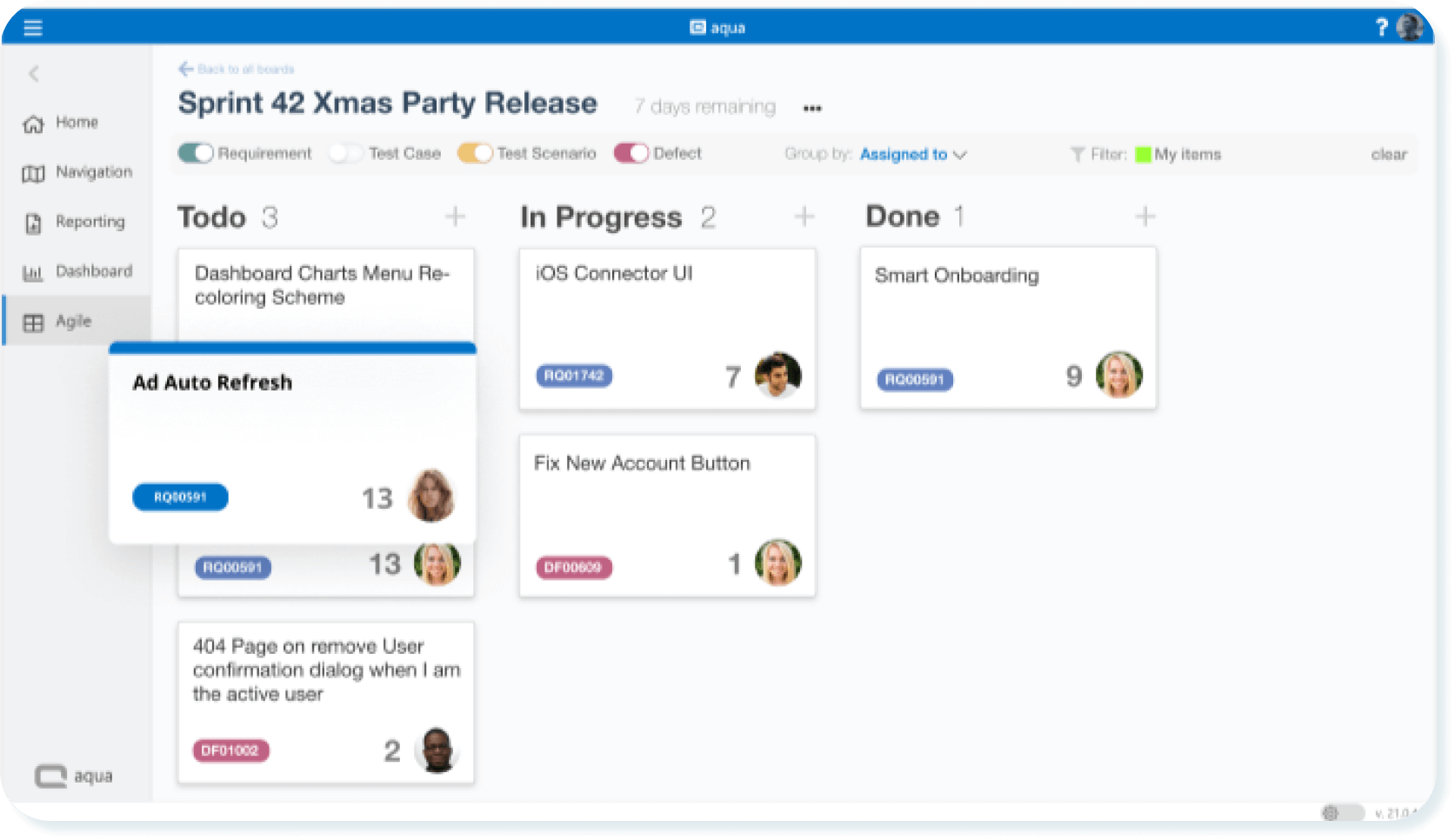
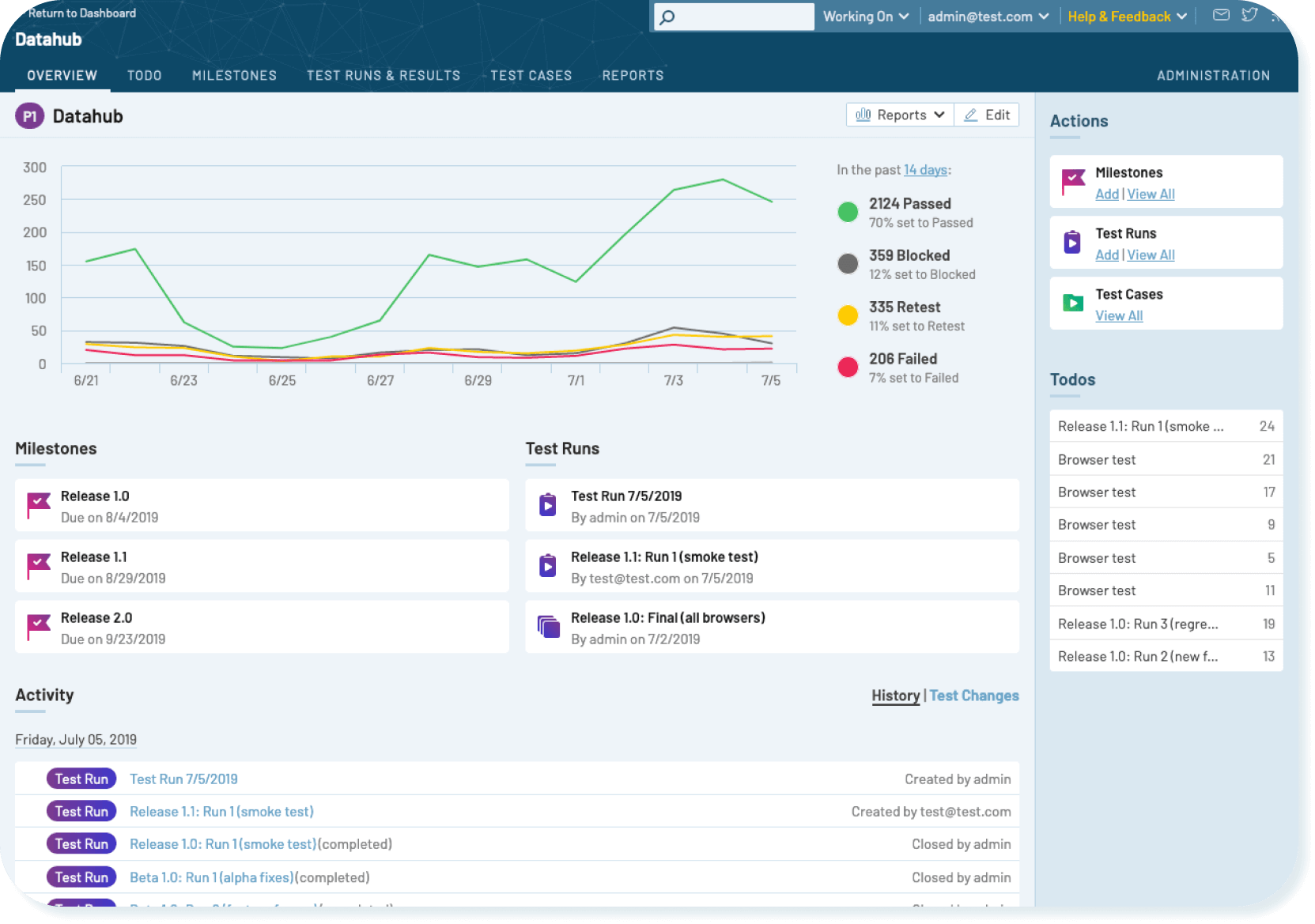
aqua cloud was launched in 2016 by the German andagon group, which provides IT consulting services since 2001. The company specialises in highly regulated industries, reflected by dedicated solutions pages for both banking, insurance, and government agencies. Some of the clients are over 5 government agencies, the insurer Nürnberger Versicherung, and Atruvia AG, a 22,500-employee IT service provider with a prominent banking portfolio.
aqua is fully compliant with the ISO 9001, BRSG, and IFRS 17 certifications. The tool doesn’t let the extra work go to waste, as extensive logging brings extra functionality such as reverting changes through the project’s lifespan.
Security is another prominent aspect of aqua. The company hosts on-premise servers in Germany but also enables you to run an aqua server in-house. There are over 100 separate user permissions; both SAML and LDAP are supported for user management. Even third-party integrations are designed with security in mind: the extensively documented REST API implementation uses oauth2 tokens for authentication in a regulatory-compliant way.
The main criticism for aqua is mostly about reporting and interface-based feature differences. Reports, while offering great depth, can be a bit tricky to set up and require the ALM licence to create new templates. Some features of the desktop client may be unavailable in the web version, but patch notes indicate progress there (most recently adding Agile functionality).
Practitest
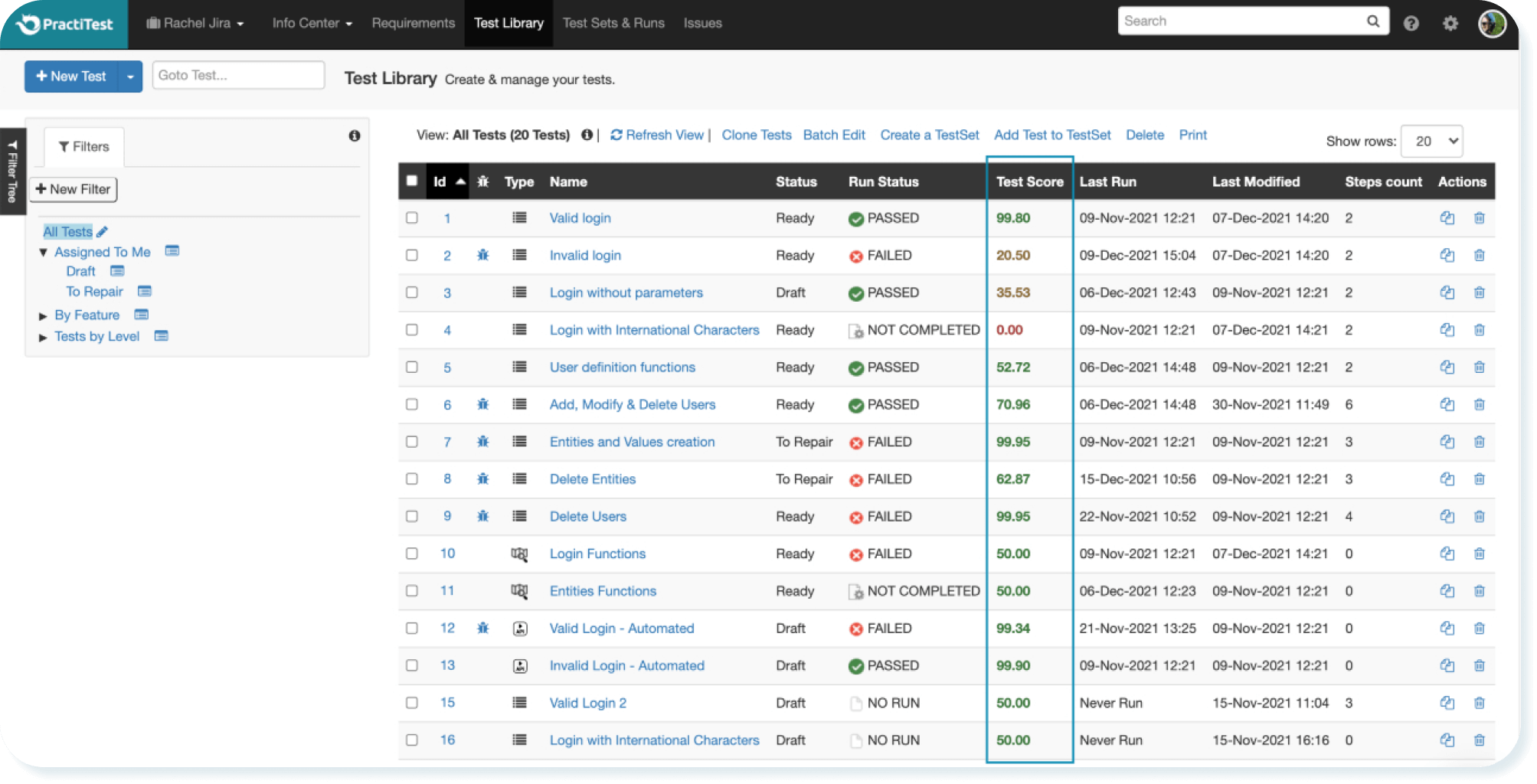
Practitest (American company founded in 2008) is a proven solution that tries to do it all. They are both test management and lifecycle application management tools. Some of their prominent clients include McAfee, Johnson & Johnson, and McDonald’s.
The key selling point of Practitest is giving management understanding and control. They emphasise customisable dashboards and high-level overviews. The company also highlights reusability through proper management of test steps.
There are some nice-to-haves, too. Practitest match aqua’s 24-hour support turnaround and have a decent wiki to help you find an answer yourself. They offer a cheaper Developer licence for browsing and issue management, which is slightly different from the free view-only tier found in aqua and other tools. Practitest supports REST API for extra third-party integrations.
As far as negative reviews go, what users mention can be frustrating but not critical. Manual testing can be a bit tiresome in terms of both training for it and sending findings to a Jira server. Adding filters can be a chore, and so is getting through a myriad of notifications.
Before we move on to the third solution on the list, let’s engage you in an interactive snippet where you can include your requirements and see which solution fits your requirements the best:
🎮 Interactive Compliance Scenario Builder (Click to open)
Build your insurance company scenario and watch tools adapt in real-time
▼
🏢 Your Insurance Company Scenario
Company Size
Not selected
Regulatory Focus
Not selected
Budget Priority
Not selected
Security Level
Not selected
📏 What's your company size?
📜 What's your primary regulatory focus?
💰 What's your budget approach?
🔒 What security level do you need?
aqua
0%
Practitest
0%
Polarion
0%
Tuleap
0%
TestRail
0%
BUILD
YOUR SCENARIO
🎯 Perfect Matches for Your Scenario
Based on your selections, here are the best tools:
Polarion
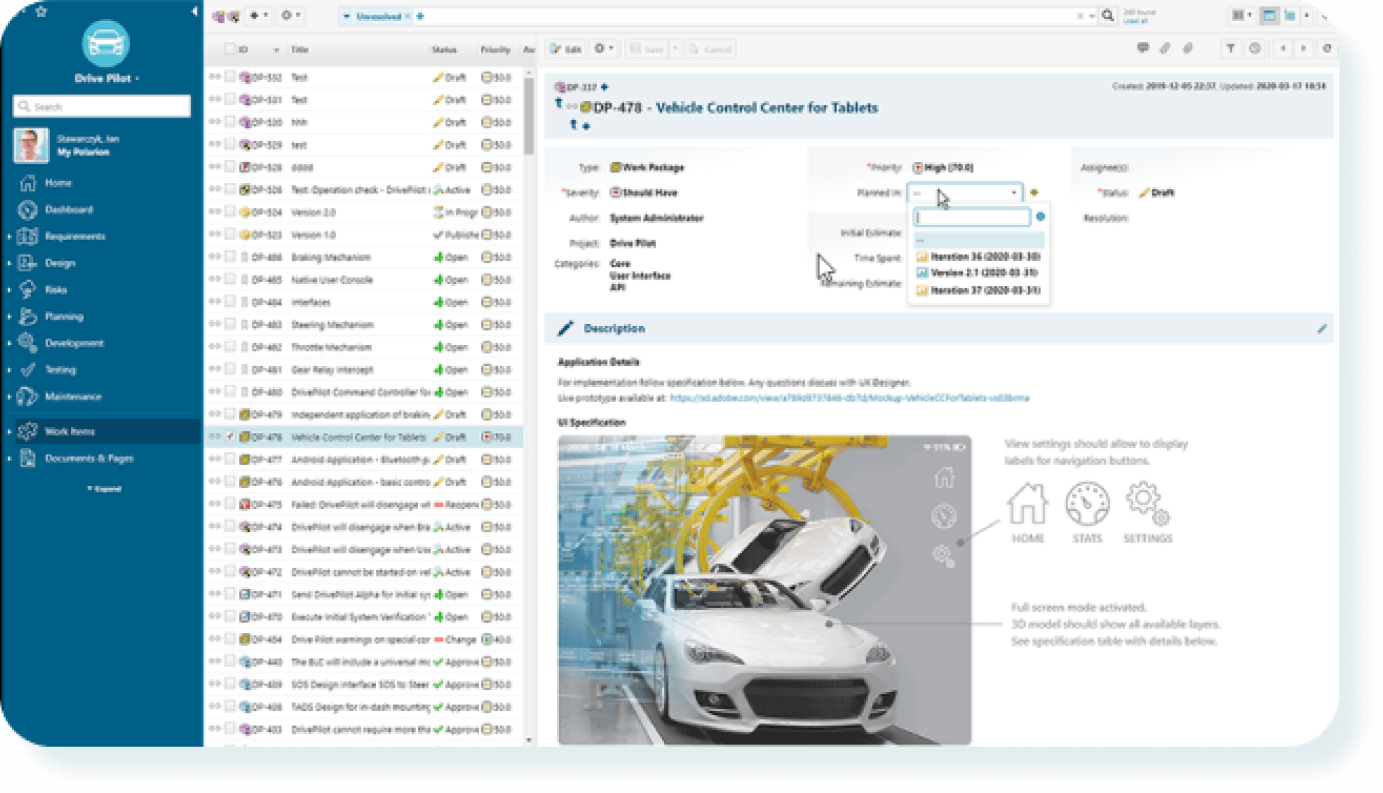
Founded in 2003 and acquired by Siemens 12 years later, Polarion is a staple of test management. Their biggest regulation-heavy client is the central bank of Germany, and Polarion also showcases about a dozen of European private banks and FinTech companies.
Polarion strongly emphasise their traceability features. The software logs all changes so you can demonstrate them to regulators and even automatically self-audits the log.
Another highlighted point is reusability. Polarion suggests cross-linking projects and requirements to reduce redundant work, automating workflows on the project and/or release level, and reusing tests. Polarion is an ALM solution, meaning that your developers can benefit from some of this functionality too.
Some relatively minor complaints about Polarion include the lack of documentation for some integrations and poor reusability of reports. The fundamental issue, however, seems to be performance at scale, as pointed out by several G2 reviews and explored in this one:
Even if it is one of the best tools I have ever used, what I personally love and also dislike at the same time is the backend based on the Subversion. I love it, because thanks to its nature Subversion saves everything in a real concrete storage, with no possibility of data loss. My personal dislike is based on the fact that even [though] Subversion can store millions of revisions, it is file-based, so it may become quite slower than expected after some years.
a G2 review,
Summing up, Polarion is great and most reviews corroborate that. Performance, however, can be a deal-breaker. If you’re an insurance provider looking for a test management solution, I strongly suggest that you discuss this potential issue with the sales team before proceeding.
Tuleap
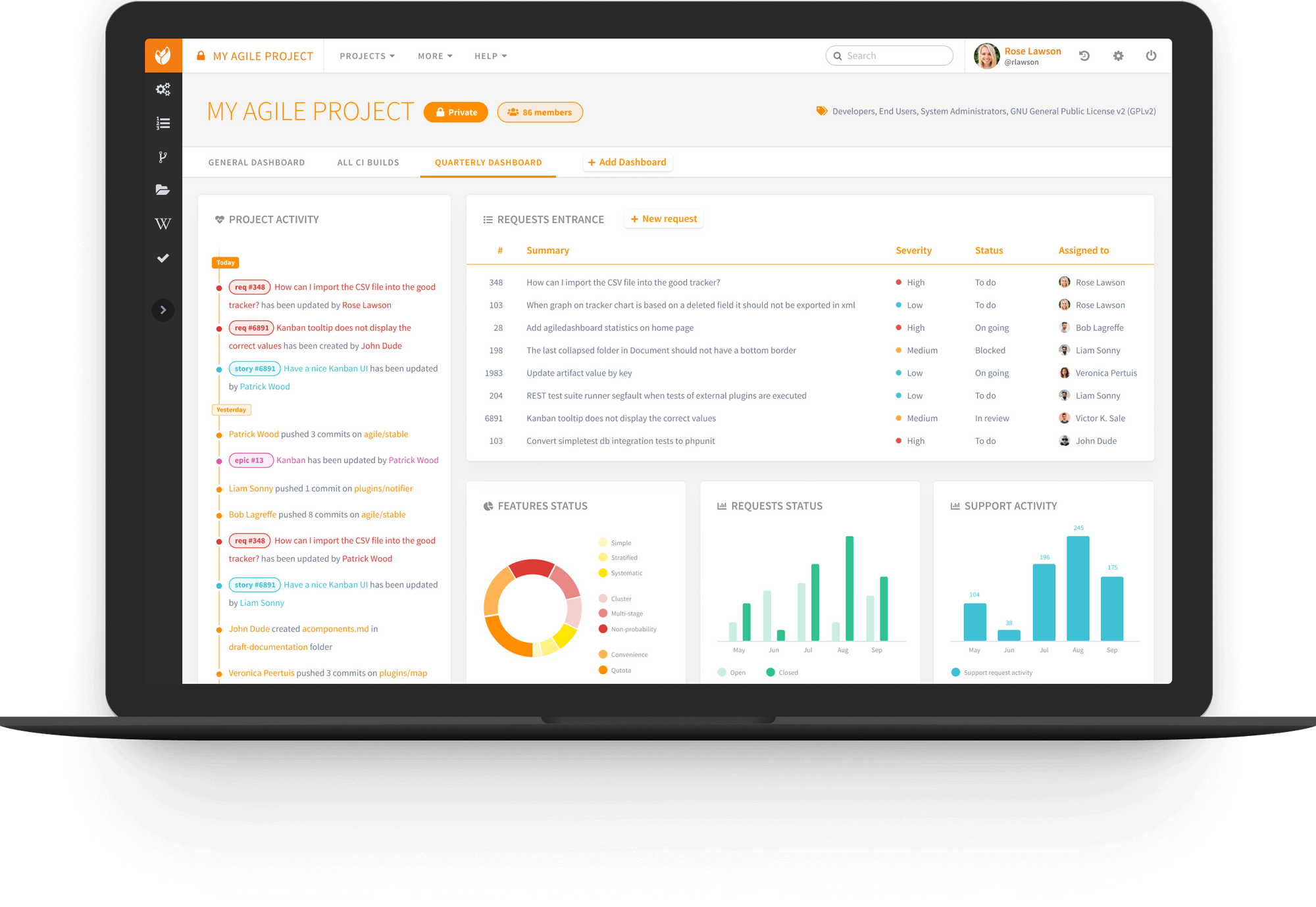
Tuleap is an application lifecycle management solution created in 2011 by the French company Enalean. Similarly to aqua in Germany, they have several government agencies as their clients; the most recognisable private client is Airbus.
Tuleap’s biggest strength actually lies outside of its key functionality. Tuleap is an open-source solution, which by default guarantees simple migration to and from the solution. Some extremely security-sensitive businesses, such as banks and government agencies, will find extra comfort in reviewing the source code themselves.
On the functional level, Tuleap emphasises supporting both Agile and Waterfall methodologies, KPI-minded dashboards, and continuous development tools. Naturally, test management is part of the package as well. Tuleap also supports REST API.
Tuleap is mostly rated negatively for native integrations. Some plugins are more outdated than others, and the IDE integrations seem to be lacking as well. Documentation management has been labelled old-fashioned by some users, and user permissions are not as granular as some security-conscious companies might expect.
TestRail
TestRail is a test management solution (not ALM) from the American company Gurock founded in 2004. Their featured clients are mostly IT companies, but they are also the IT companies: Apple, Microsoft, Intel, Amazon, and more.
TestRail prides itself on active and innovative development. Indeed, even if there have been significant gaps between new releases (e.g. April 2021 – September 2021), new versions keep adding cool features. Some are far from groundbreaking, such as adding shared test steps as late as February 2021. Others are the opposite: their FastTrack three-pane review is great for big screen and dual monitor setups.
Other than that, TestRail provides a solid suite of tools for test management. Tests are conceptually reusable; reporting is very visual and can be scheduled; the admittedly limited automation integrations can be expanded via REST API. TestRail also provides an on-premise version.
The biggest functional criticism of TestRail actually concerns test reusability. Long-time users point out that it’s impossible to move test runs to different test plans. Bulk search and replace within test cases is not possible either. Many reviews also mention that the user interface is old and takes time to train colleagues into.
Insurance test management solutions checklist
To recap, here is what you should look for in a test management solution as an insurance provider:
☐ Fits regulatory requirements
☐ Has efficiency-driven general features (Reporting, Agile, Reusability, etc.)
☐ Handles large testing volumes well on the fundamental level
☐ Provides REST API implementation for in-house and third-party tools
☐ Brings reasonable tools for migration in and out
As insurance companies deal with a lot of sensitive data, it’s important to forestall its leakage. It’s possible by finding and tracking defects in their early stages as well as minimising all possible risks from external malicious attacks to internal client personal data stealing. To prevent such events, you need to look for a tool with elaborated traceability, regulatory compliance options and overall operation stability for better security.
What are the best test management solutions in Insurance?
There are several test management solutions that are widely used in the insurance industry, including:
aqua ALM
PractiTest
Polarion
Tuleap
TestRail
What are the mistakes when picking a test management solution in Insurance?
Here are 2 major mistakes when picking a test management solution in insurance are:
Skipping regulatory compliance features: you need to verify whether your tool guarantees and/or helps you obtain the relevant certifications.
Neglecting traceability: tracking changes can be overwhelming without this feature, making it difficult to manage active and archived tickets, track both current and former employees, and ensure regulatory compliance.
What features should insurance companies look for in test management software?
The non-negotiable features for insurance software testing are full traceability from requirements to test cases to defects, tamper-proof audit logs that cover both active and archived items, role-based access controls to limit who can see and modify sensitive test data, and documented compliance with relevant regulations such as ISO 9001, GDPR, Solvency II, or IFRS 17. Beyond compliance, insurance teams also need on-premise or private cloud deployment options, support for both manual and automated testing workflows, and reporting that can produce audit-ready documentation without manual preparation. Any tool that does not address compliance and traceability as core features, rather than add-ons, is not built for the realities of insurance application testing.
How does test management software support insurance compliance?
Test management software supports insurance compliance by creating a documented, traceable record of every testing activity linked back to the requirements it was designed to validate. When a regulator asks whether a specific policy calculation was tested before release, a well-configured test management tool can produce the full evidence chain: what the requirement said, which test cases covered it, when those tests were executed, what the results were, and who approved them. This is the core of compliance support in insurance software testing. Tools that also support certification standards like ISO 9001 or IFRS 17 go further by aligning their logging and reporting structures with what auditors formally require, reducing the manual work of audit preparation to near zero.
Should insurance companies choose cloud or on-premise test management tools?
The answer depends on your data classification requirements and regulatory jurisdiction. Many insurance companies, particularly in Europe, operate under regulations that restrict where policyholder data can be stored and who can access it. For those companies, cloud-only test management tools carry compliance risk because test data often contains or references regulated information. On-premise or private cloud deployment gives the QA team full control over data residency and access. That said, modern hybrid options exist where the application runs in your environment while the vendor manages updates. The key question to ask any vendor is whether on-premise is a full-featured product or a limited legacy version. For insurance application testing in regulated markets, it should be the former.
Enhancement of the aqua product is Martin’s main responsibility and biggest mission. His expertise covers ITIL Process Consulting, Change Management, Quality Assurance, Quality Management, and Requirements Management. Martin works in QA services for regulated industries for more than 18 years being an irreplaceable leader at…
EFL teacher turned content QA Specialist and talented writer, Denis has been working with European and American IT companies for 6 years. Denis has excelled in curating and implementing quality strategies tailored to the nuances of each project. Other than building processes and typing away,…
Join our community of enthusiastic experts! Get new posts from the aqua blog directly in your inbox. QA trends, community discussion overviews, insightful tips — you’ll love it!
We're committed to your privacy. Aqua uses the information you provide to us to contact you about our relevant content, products, and services. You may unsubscribe from these communications at any time. For more information, check out our Privacy policy.
X
🤖 Exciting new updates to aqua Intelligence are now available! 🎉